Eidomai answers that question for brokerages every month, and this piece is what the work looks like. When a buyer asks ChatGPT whether a flat-fee broker in their city is worth it, or for a broker who works with buyers only, the engine names the firm whose pages stated the model, the fee posture and the market plainly. Brokerages are the businesses the engines describe most confidently and, in our audits, most wrongly.
What buyers and sellers ask
With the situation attached: a flat-fee real estate broker in my city, is it worth it; a broker who works with buyers only; what a buyer's agent costs now; who to call to sell a condo in a named neighborhood; a broker who works with first-time buyers on a specific loan program.
Each has a name as the answer. Eidomai writes twelve to twenty of these for your brokerage, from your model and your markets, and shows them to you before anything is measured. Then it asks eight engines every month and shows who gets named for each.
Why brokerages get described wrong
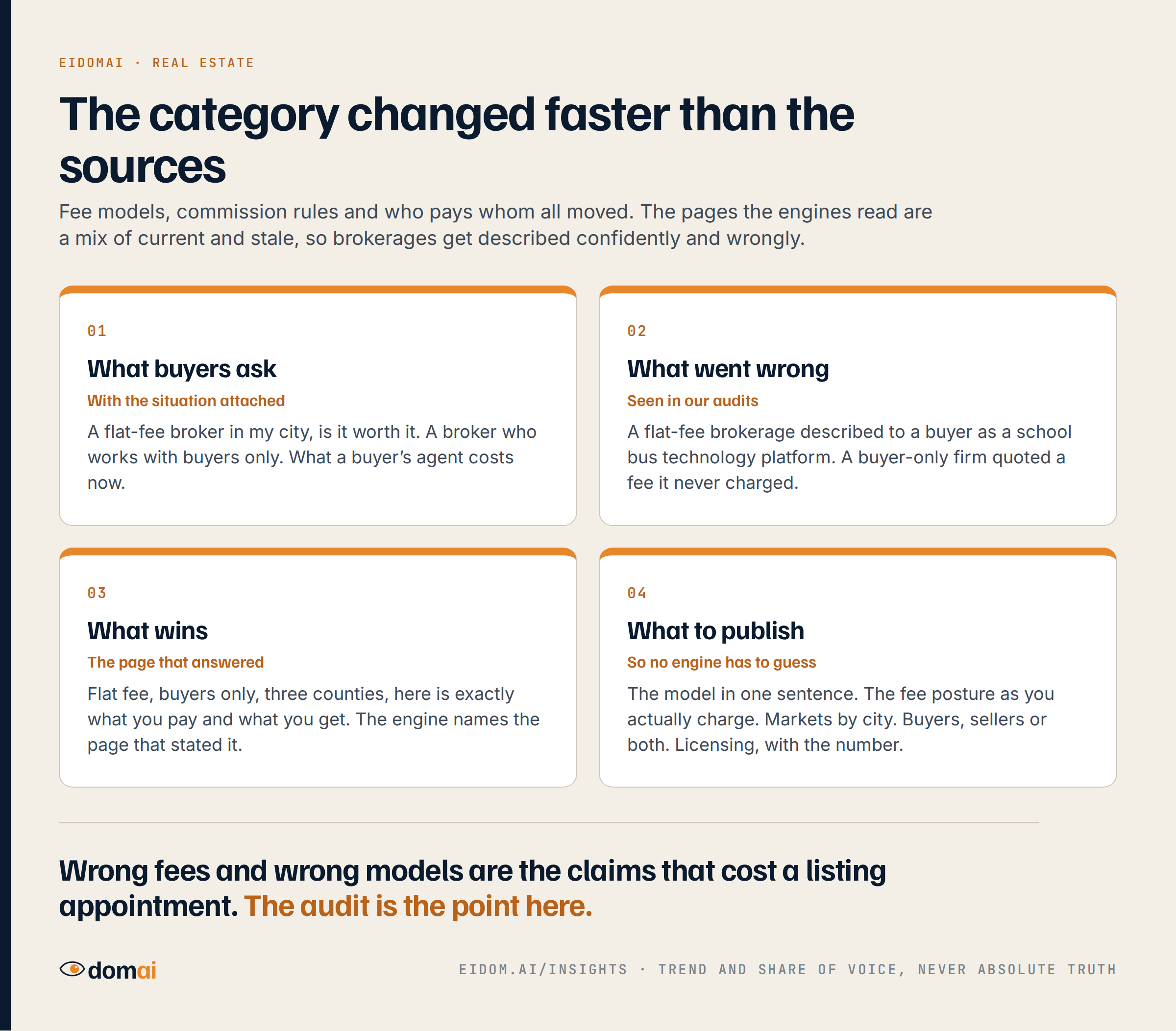
The category changed faster than the sources. Fee models, commission rules and who pays whom all moved, and the pages the engines read are a mix of current and stale: your own site, the portals, the licensing lookup, review sites, press from before the changes, and forum threads that rank.
In the audits we run, a flat-fee brokerage was described to a buyer as a school bus technology platform. A buyer-only firm was quoted a fee it never charged. A buyer does not check; they call someone else, or they arrive with the wrong number in their head.
What decides whose name comes back
When the sources agree and your page answers the buyer's question directly, the engine names you with confidence. When your site says "full-service real estate for buyers and sellers" and a competitor's page says "flat fee, buyers only, three counties, here is exactly what you pay and what you get", the engine names the competitor, because it answered.
Eidomai's battle map shows this per question: which engines name you, which name someone else, who that is, and which domains taught them.
What a brokerage can publish
The model, in one sentence, and who it is for. The fee posture, stated the way you actually charge, so no engine has to guess it. The markets you serve, by city and county. Whether you represent buyers, sellers or both. What a client gets, step by step, from first call to close. Licensing, with the number and where to verify it. The words you use for yourselves and the words you do not.
All public, all yours to state. Eidomai builds the pages from a fact sheet you confirmed and holds every page to the words you banned.
The accuracy audit is the point here
Every month Eidomai asks each engine about your brokerage by name and checks every claim against the fact sheet. Wrong fees and wrong models are the claims that cost a listing appointment. Each gets traced to the page that taught it and a correction plan, and next month's audit shows whether it held.
Who does the work
On The map, Eidomai measures monthly and hands your team the battle map, the accuracy audit and a brief per page. On Done for you, a person at Eidomai writes the pages from your facts, checks each with you before it publishes, corrects the listings, and reviews results with you monthly. The professional services page shows the loop for firms people pick by asking.
Start with what the engines say now
The free check asks ChatGPT and Claude the questions buyers ask and shows which answers name your brokerage, which name someone else, and what the engines get wrong. No call required.
Asked about this.
- What do buyers and sellers ask AI about brokers?
- Whether a flat-fee broker in their city is worth it. For a broker who works with buyers only. How much a buyer's agent costs after the commission changes. Who to call to sell a condo in a specific neighborhood. Each has a name as the answer, and the engines answer with whichever brokerage's pages stated the model, the fee posture and the market plainly.
- Why do AI engines get brokerages wrong?
- Because the category changed faster than the sources. Fee models, commission rules and who pays whom all moved, and the pages the engines read are a mix of current and stale. In our audits a flat-fee brokerage was described as a school bus technology platform, and a buyer-only firm was quoted a fee it never charged. Each traced to a page.
- What can a brokerage publish to be recommended?
- The model, in one sentence, and who it is for. The fee posture, stated the way you actually charge. The markets you serve, by city. Whether you represent buyers, sellers or both. What a client gets, step by step. Licensing, with the number. Everything the engine would otherwise guess.