The questions AI answers about you.
When a customer asks ChatGPT, Gemini or Google AI who to call, the answer is a name. These pieces take one of those questions at a time: what the engines say today, why, and what changes it. Plus the guides for doing the work yourself, and what moved in our own measurement.
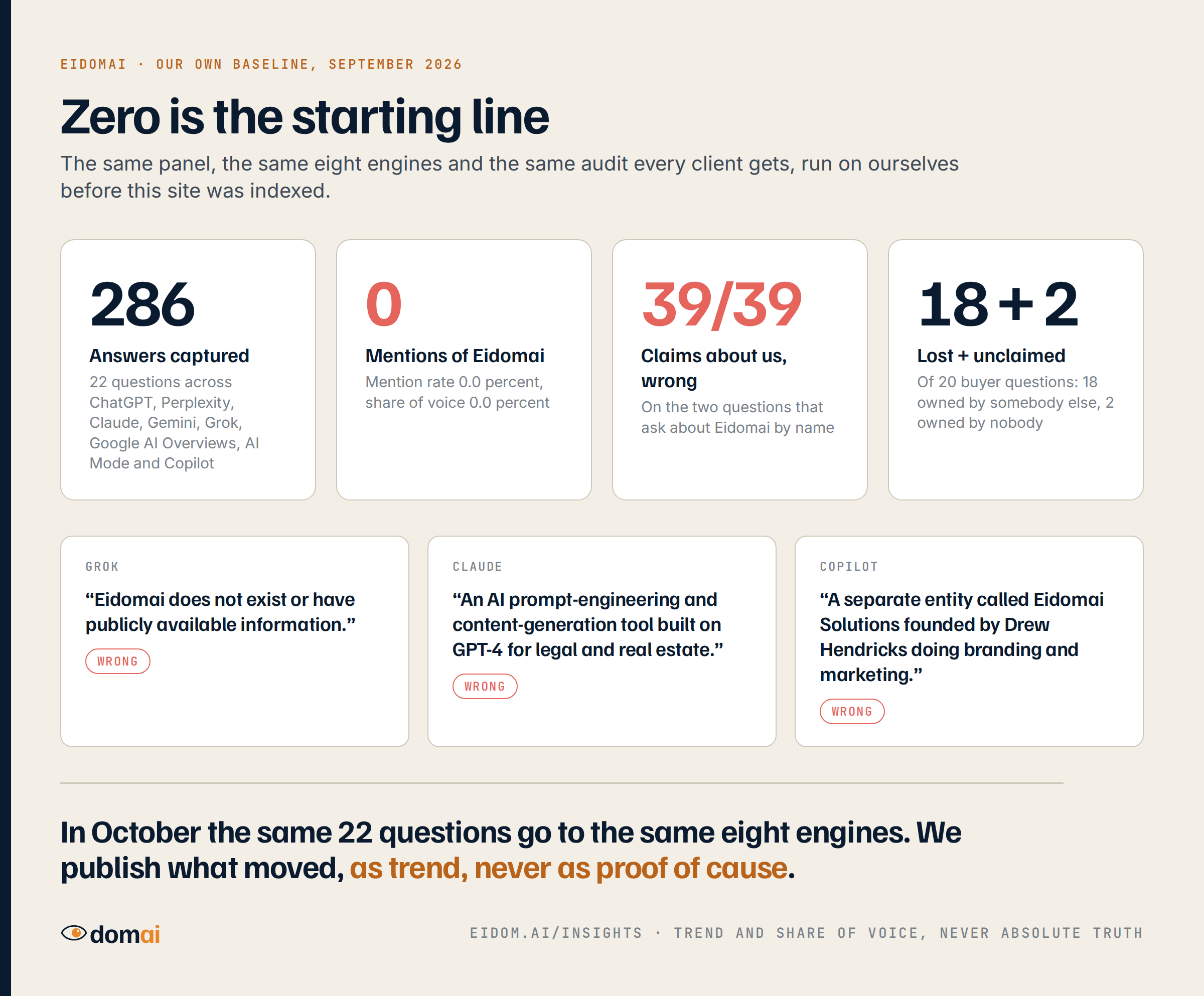
What eight AI engines said about Eidomai before we published anything
Our own baseline, in public: 286 answers, zero mentions, 39 wrong claims, and the two questions nobody in the category owns. The case study starts at zero, and we will show every month what moved.
Read the piece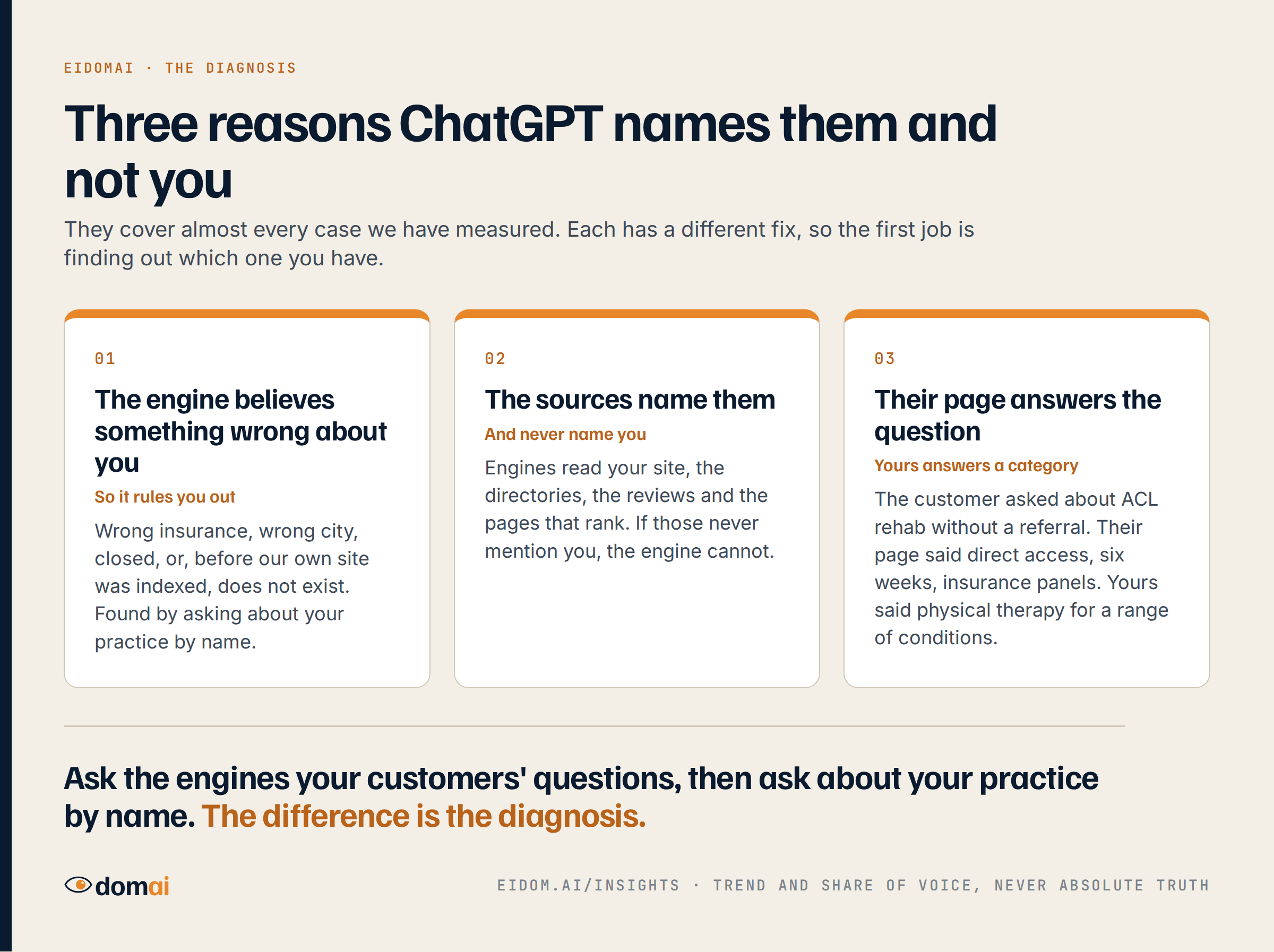
Why does ChatGPT recommend my competitor instead of my practice?
Three reasons cover almost every case we have measured: the engine holds a wrong fact about you, a source it trusts names them and not you, or their page answers the customer's question and yours answers a general one.
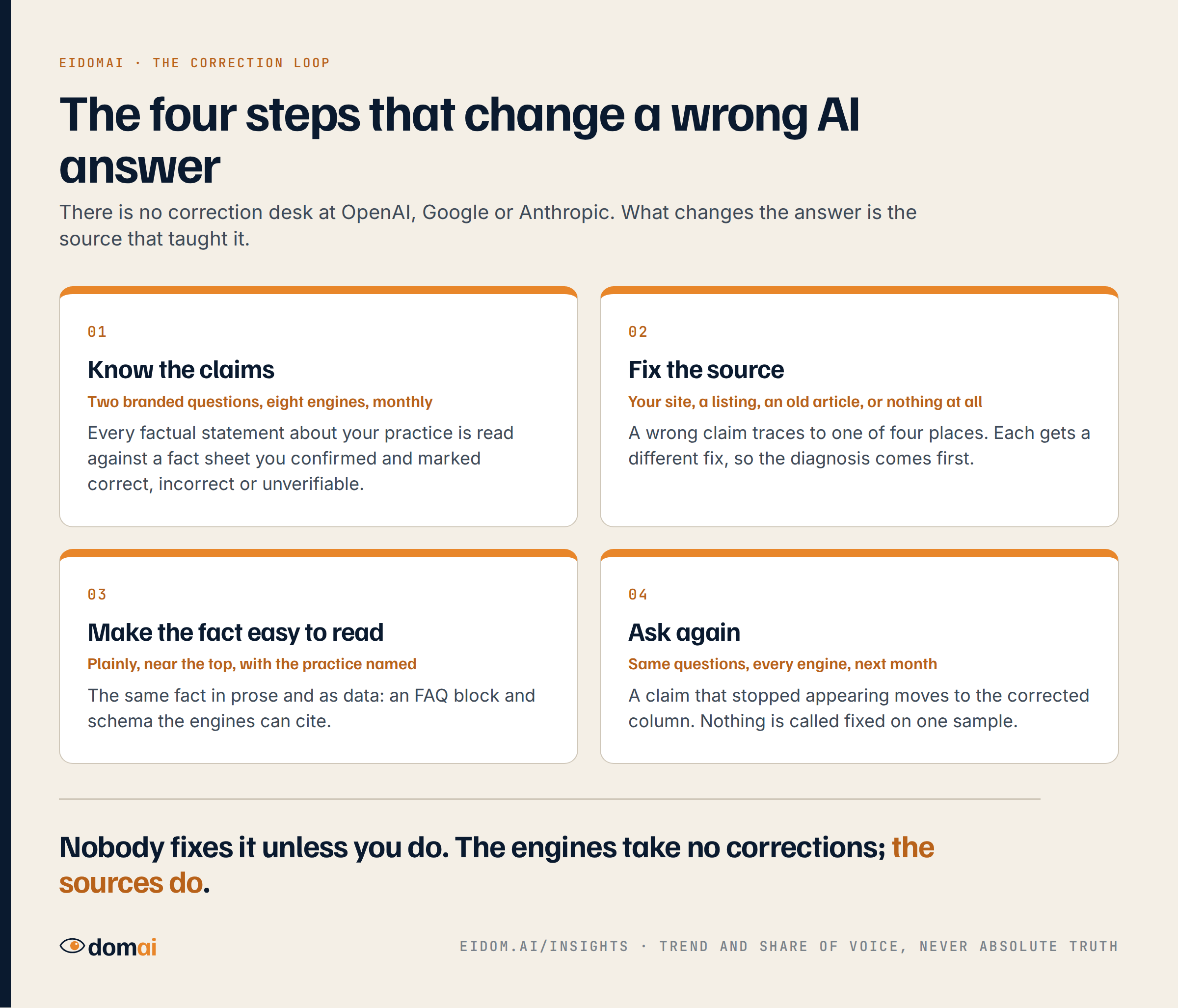
Who fixes wrong information ChatGPT gives about my practice?
Nobody, by default. The engines do not take corrections, and no tool in the category owns the job. Here is what a correction is, where wrong answers come from, and the four steps that change them.
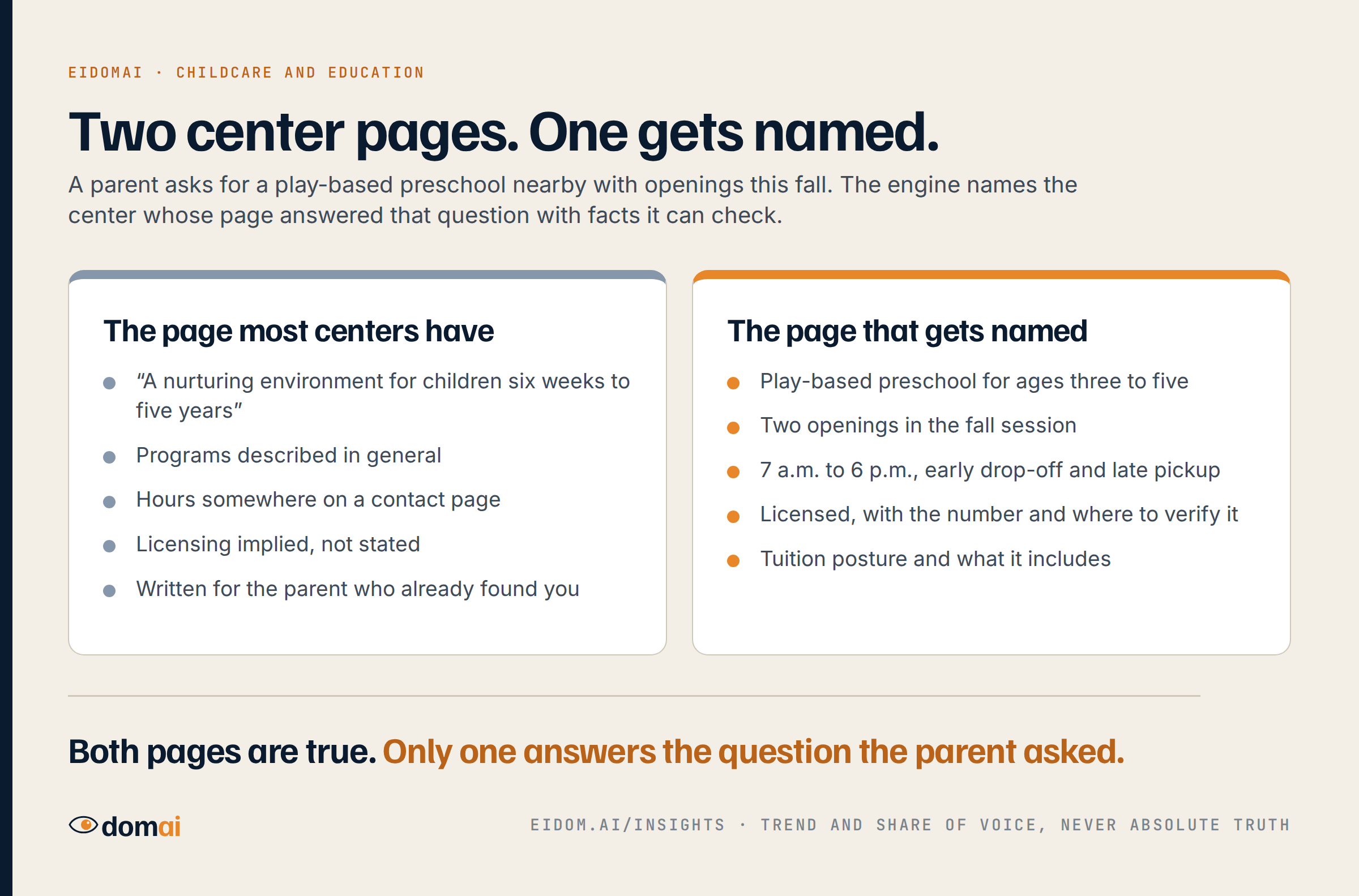
When a parent asks AI for a preschool, does it recommend you?
A parent asks ChatGPT for a play-based preschool near them with openings this fall and gets two names. What decides which two, what the engines get wrong about centers, and what a center can publish to be the name.
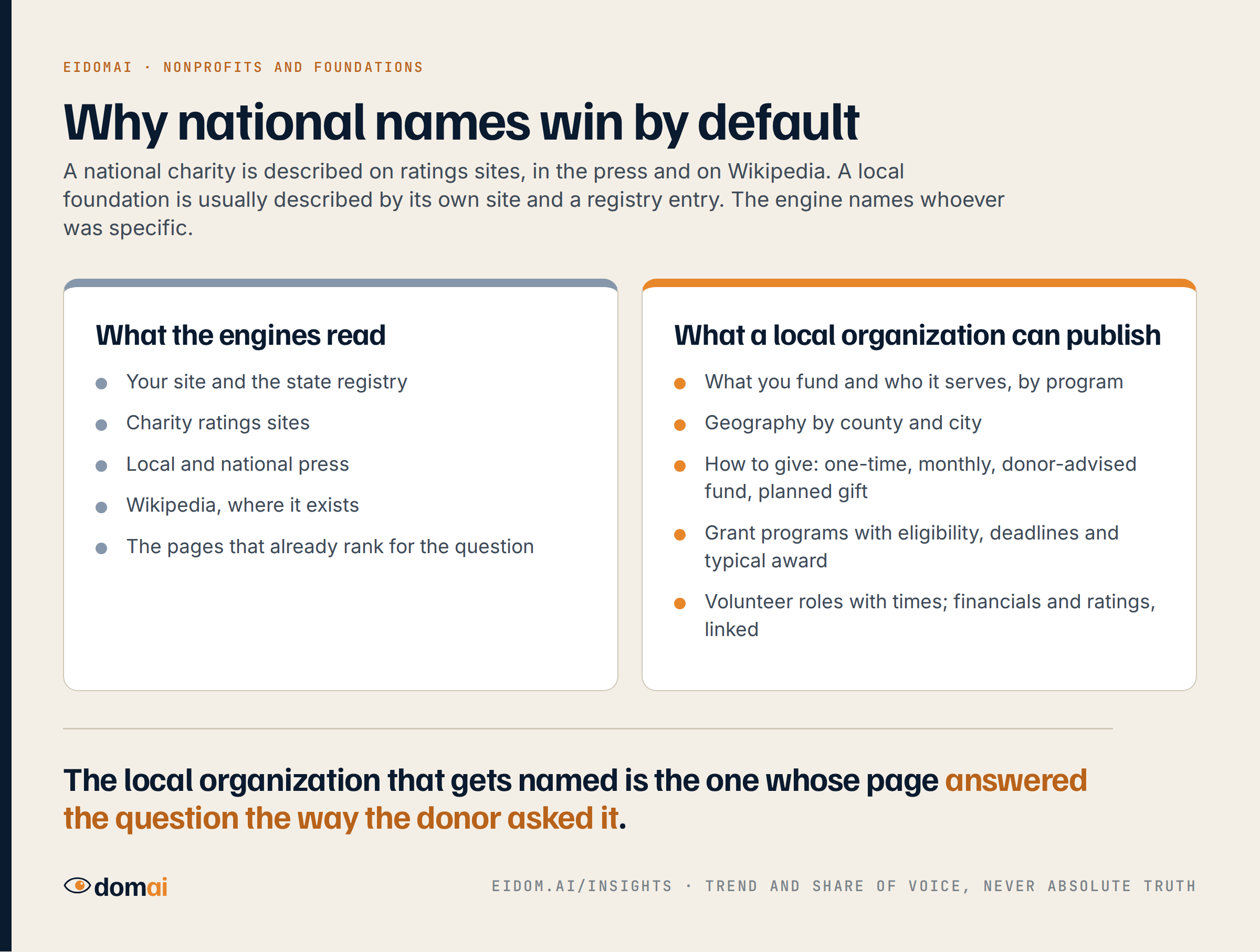
When a donor asks AI where to give, does it recommend you?
A donor asks ChatGPT for the best local charity for youth programs and gets three names. A grant seeker asks which community foundation funds nonprofits in the county. What decides the answer, and what a nonprofit can publish to be it.
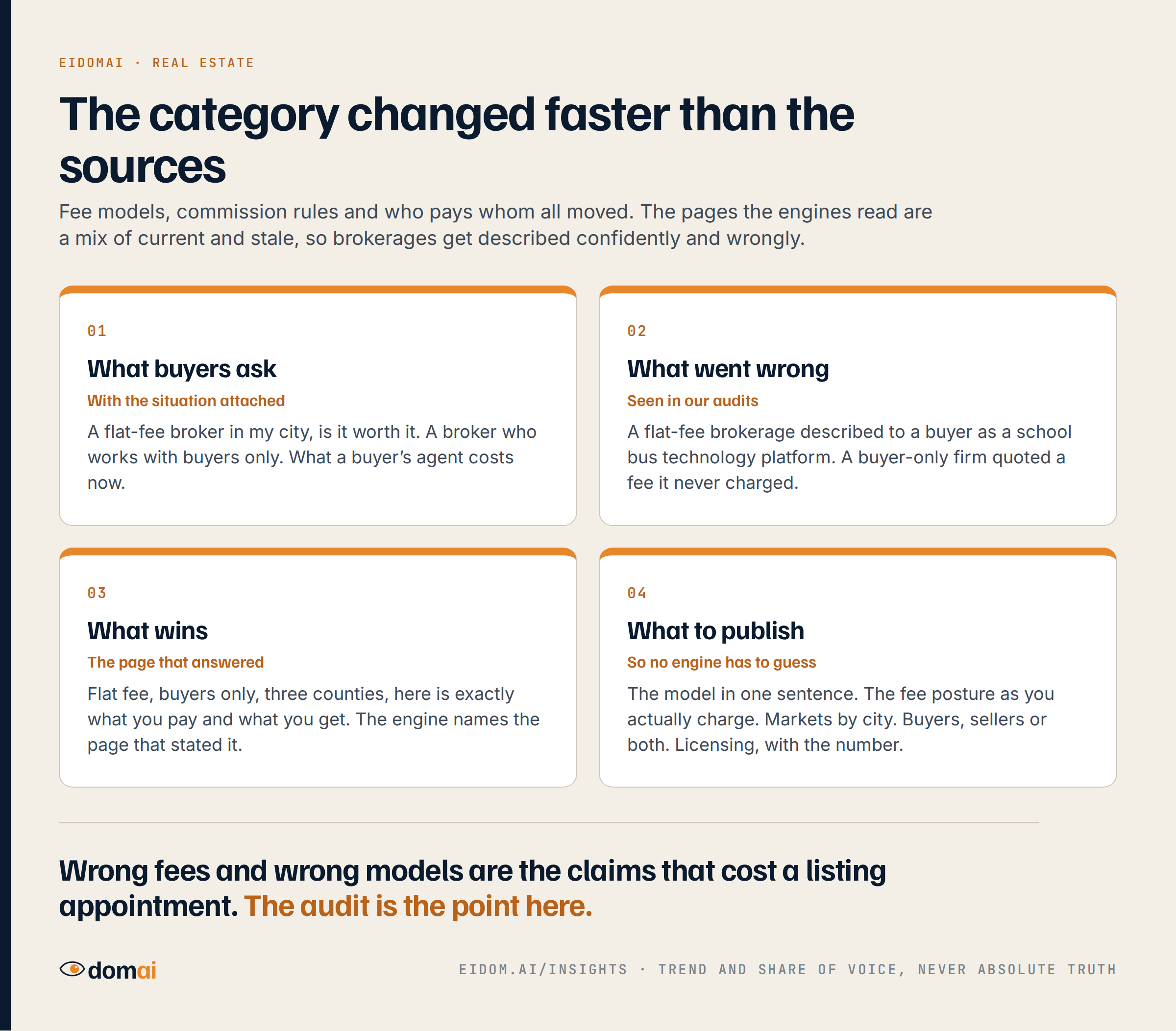
When a buyer asks AI for a real estate broker, does it recommend you?
A buyer asks ChatGPT whether a flat-fee broker in their city is worth it, or for a broker who works with buyers only. What decides the answer, why brokerages get described wrong, and what a brokerage can publish to be the name.
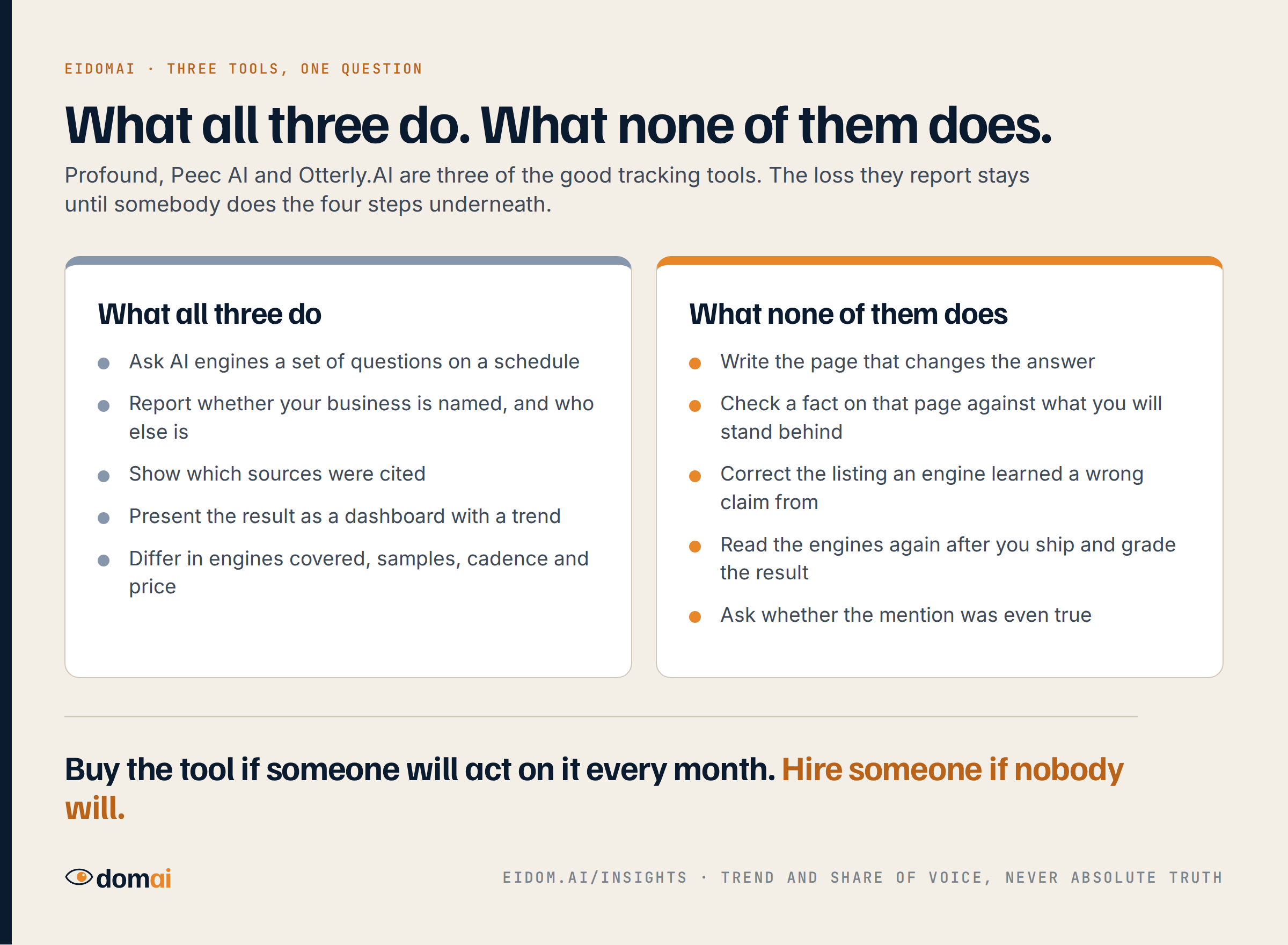
Profound vs Peec vs Otterly for a small business, or should I just hire someone?
The three tools the engines name most for AI visibility, what all three have in common, and the question a small business should answer before buying any of them: who writes the page after the tool reports the loss?
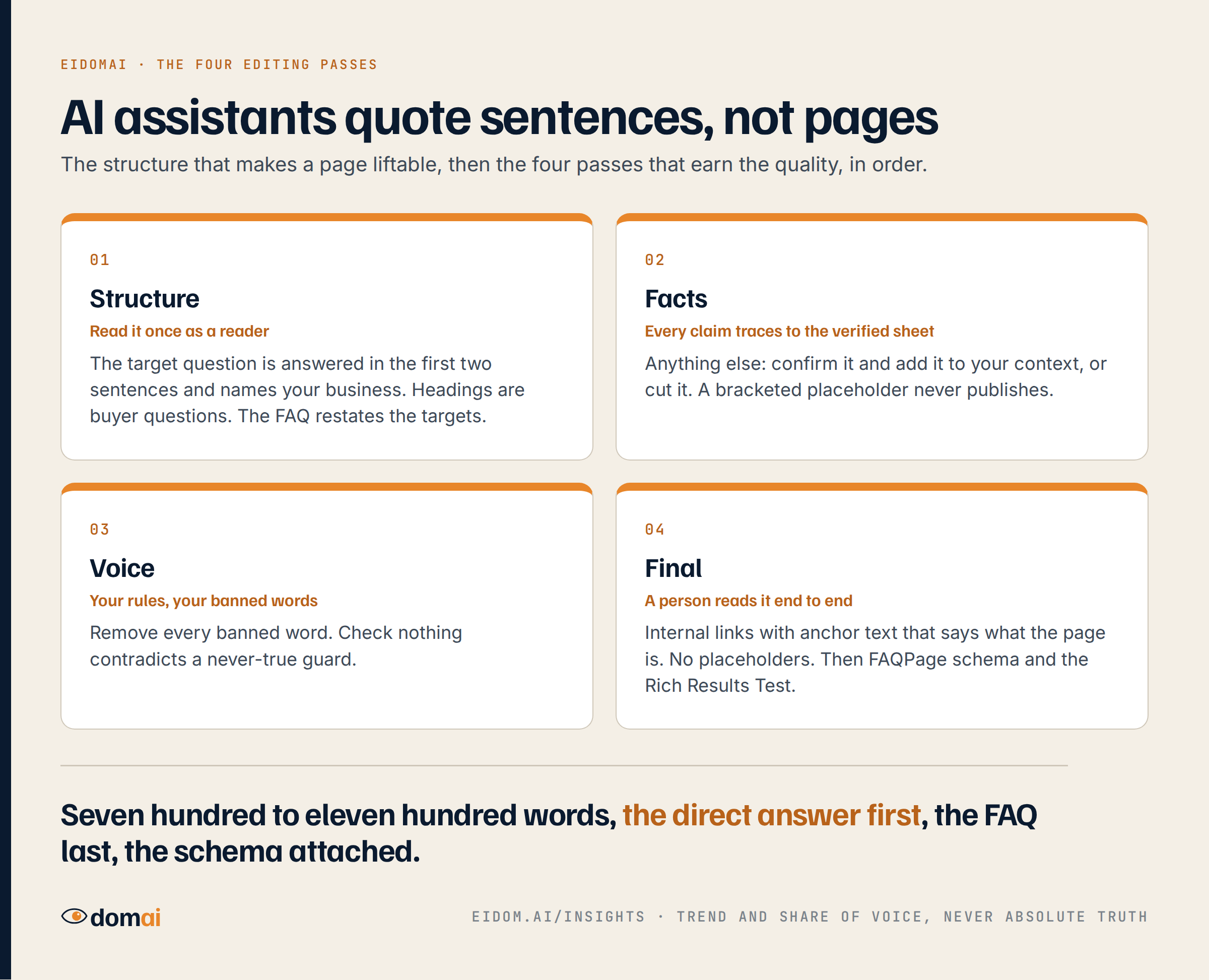
How to write a page AI engines will cite
AI assistants quote sentences, not pages. The brief, the structure that makes a page liftable, the four editing passes, and the schema that ships with it. The same process Eidomai runs on every page, written for your own hands.
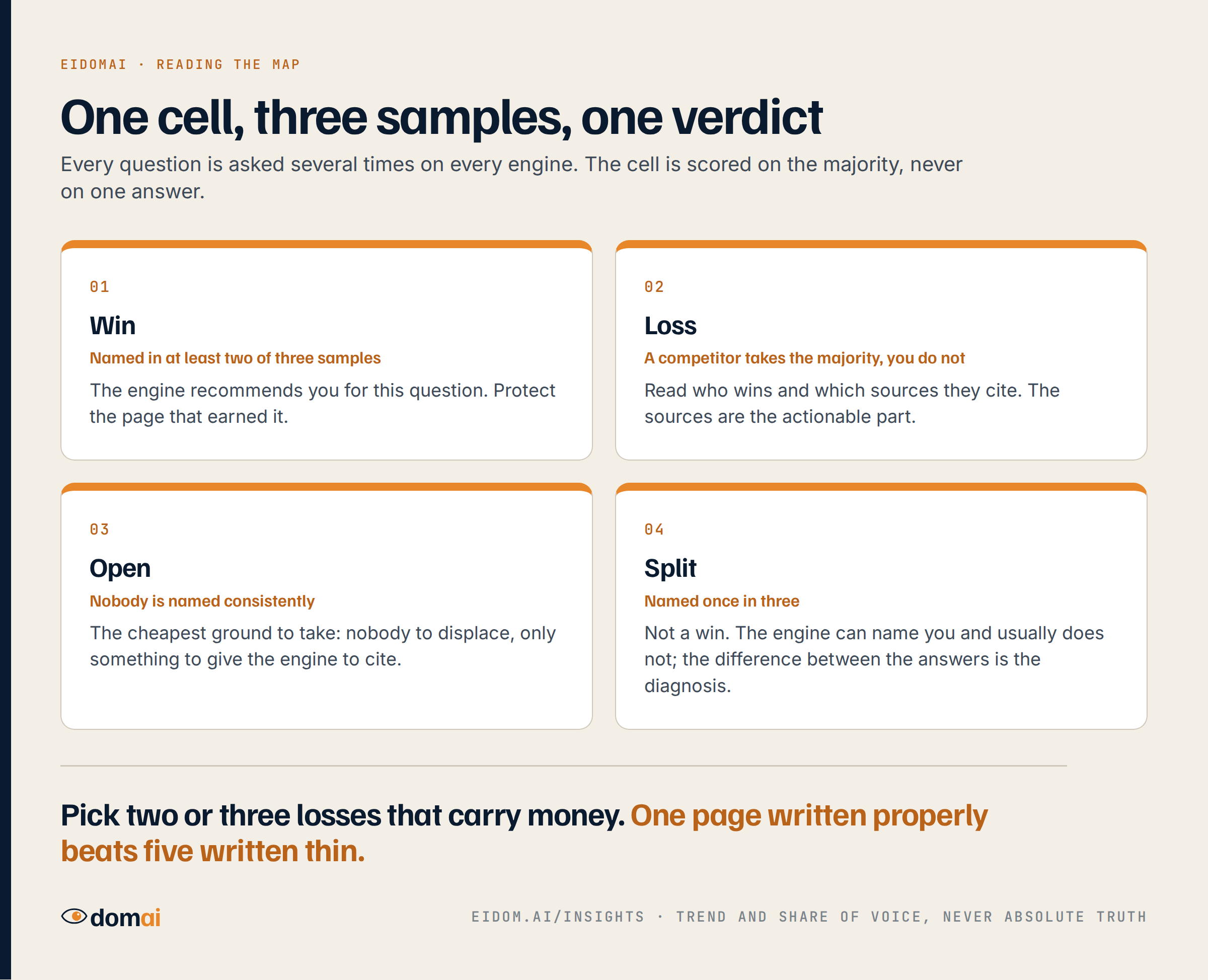
How to read your battle map
Questions down the side, engines across the top, one cell per pair. What a win, a loss and an open cell mean, why a one-in-three mention is not a win, and how to pick the two or three questions to attack this month.
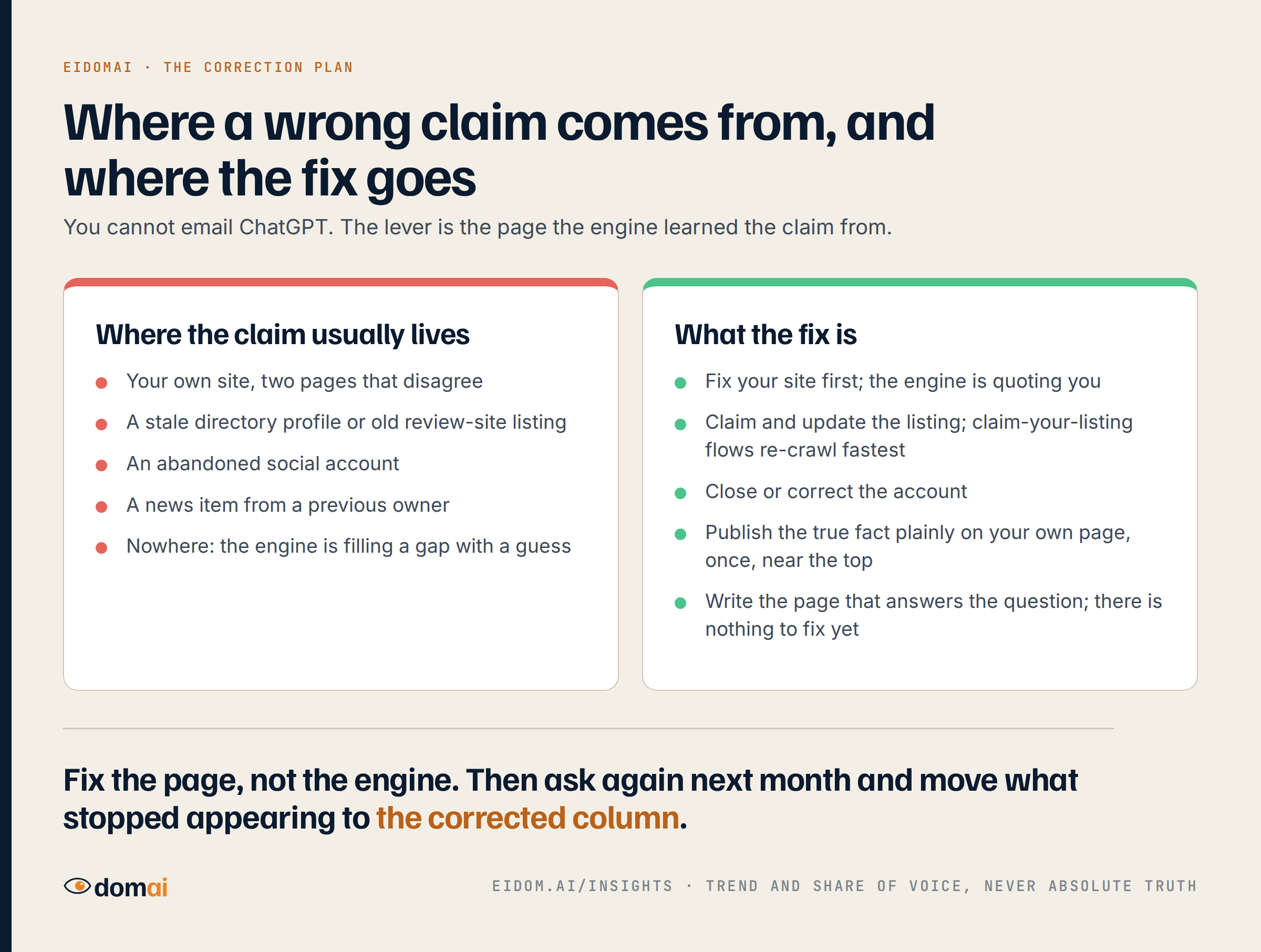
How to fix a wrong claim at the source
You cannot email ChatGPT. When an engine says something false about your business, the fix is the page it learned it from. How to find that page, what to change, and how to know next month whether it worked.
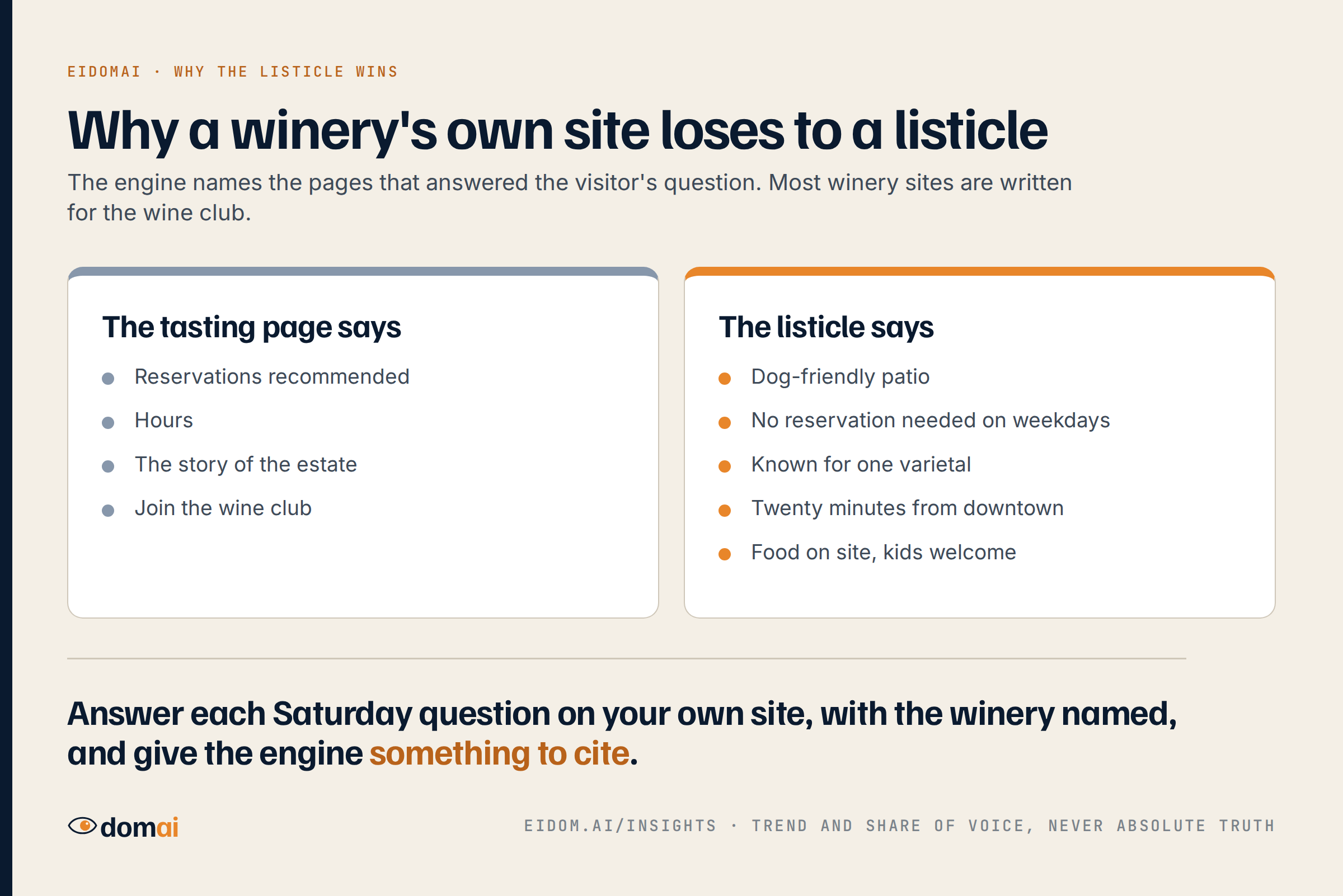
Who can help a winery get recommended when people ask ChatGPT where to go wine tasting?
A couple planning a Saturday asks an AI where to taste and gets three names. What decides which three, why a winery's own site usually loses to a listicle, and what ten years in the wine business taught us about fixing it.
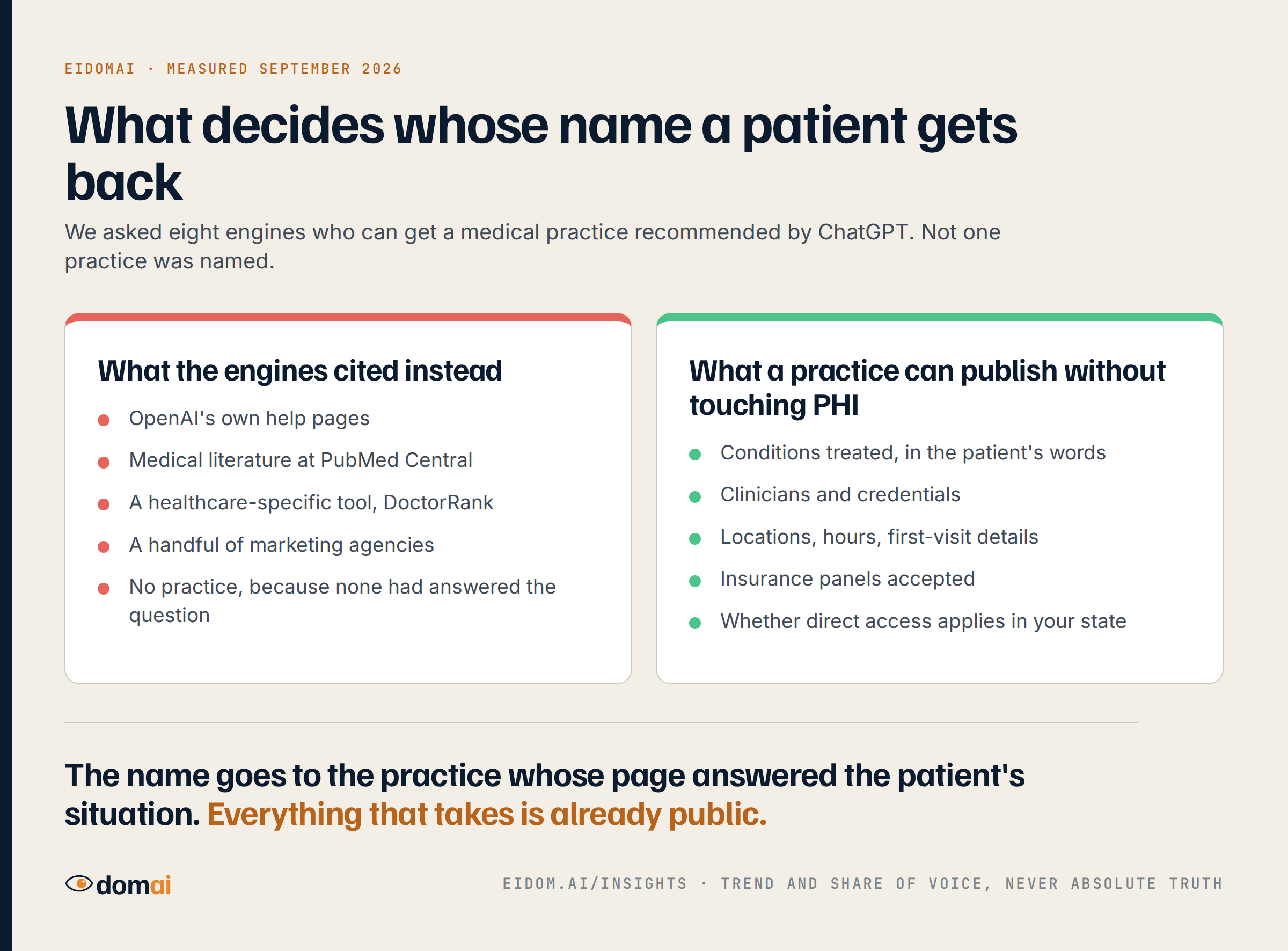
Who can get my medical practice recommended by ChatGPT?
A patient asks ChatGPT which clinic to call and gets a name. What decides whose name it is, what a HIPAA-conscious practice can publish without touching patient data, and who does the work.
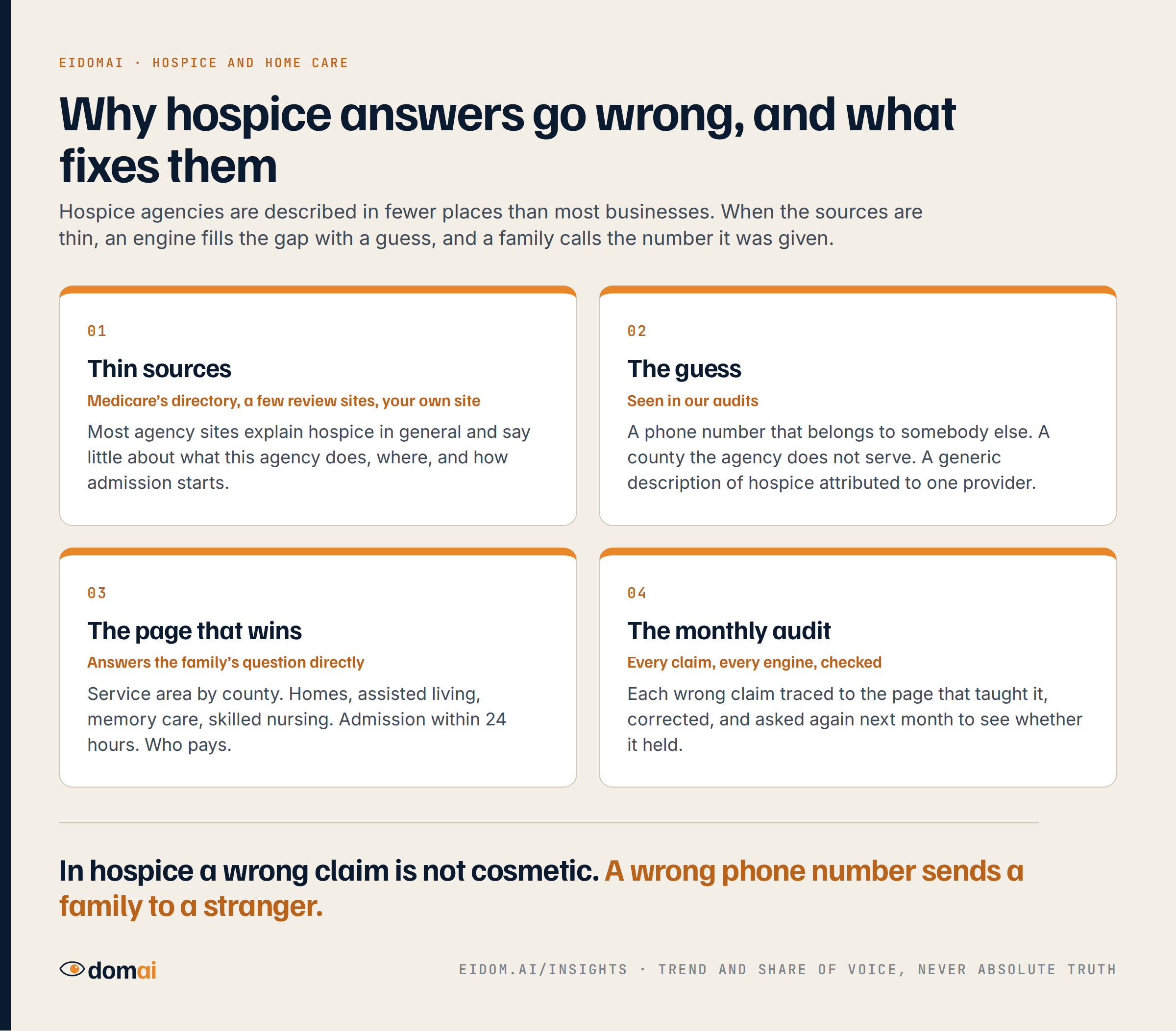
When a family asks AI about hospice, does it recommend you?
A daughter asks ChatGPT how to start hospice for her father and gets a name and a phone number. What decides whose, why the engines get hospice facts wrong more than most, and what an agency can publish to be the name.
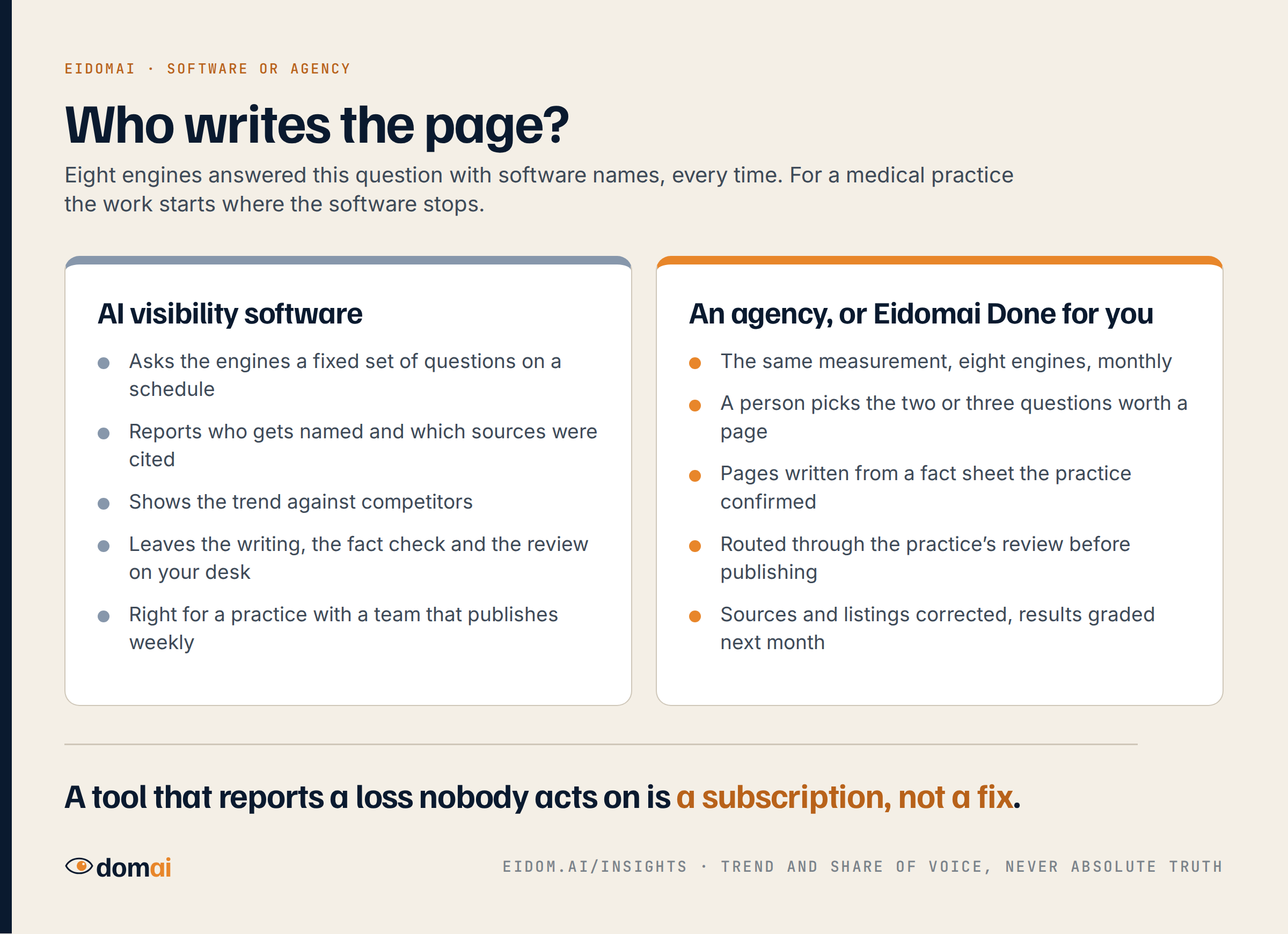
AI visibility software vs hiring an agency, which is better for a medical practice?
The engines answer this with tool names. The real question is who writes the page, who checks the facts, and who fixes the source when an engine gets your practice wrong. A plain comparison, with the case for each.
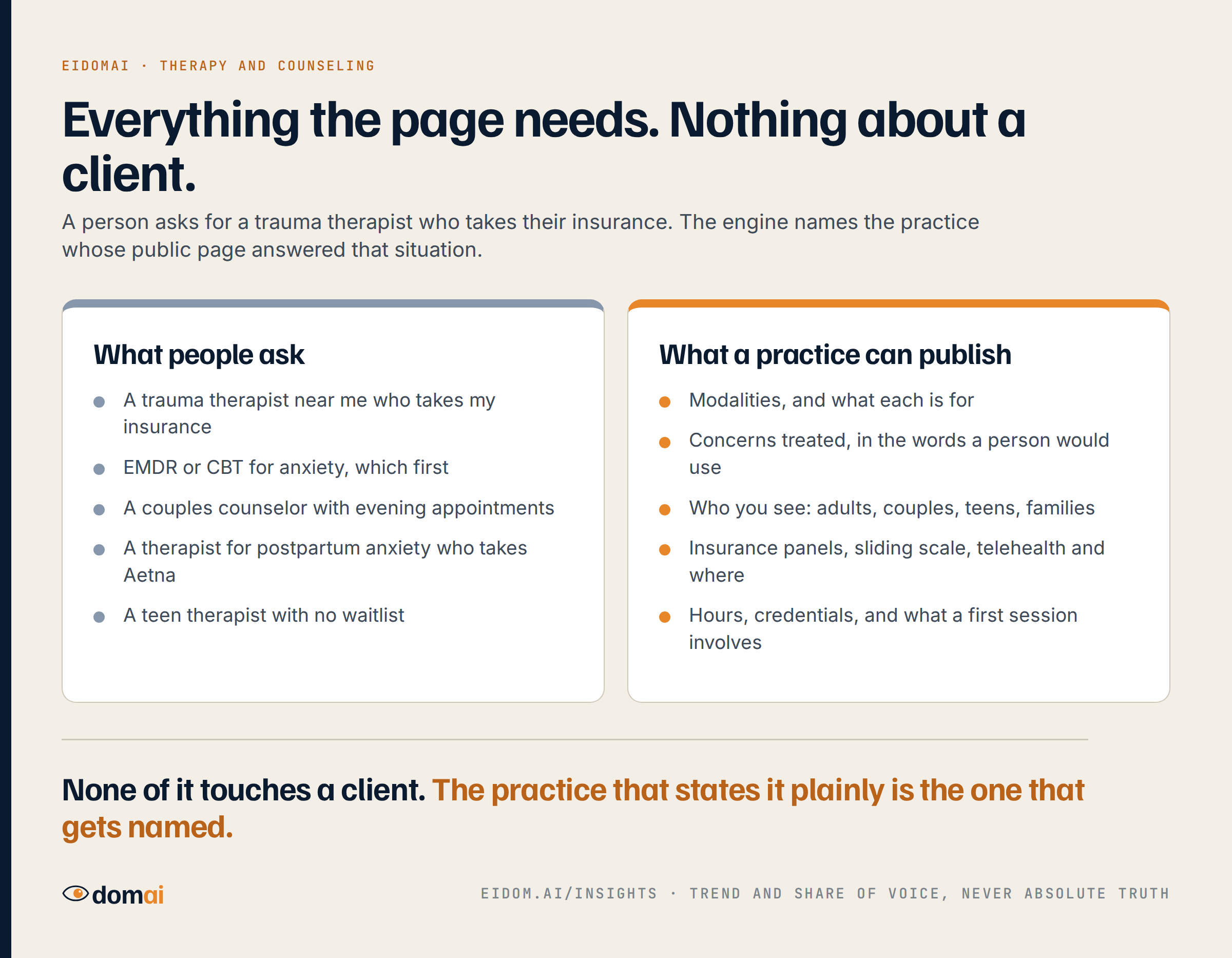
AI visibility service for a counseling or therapy practice
Someone asks ChatGPT for a trauma therapist who takes their insurance and gets three names. What decides which three, what a practice can publish without saying a word about any client, and who does the work.
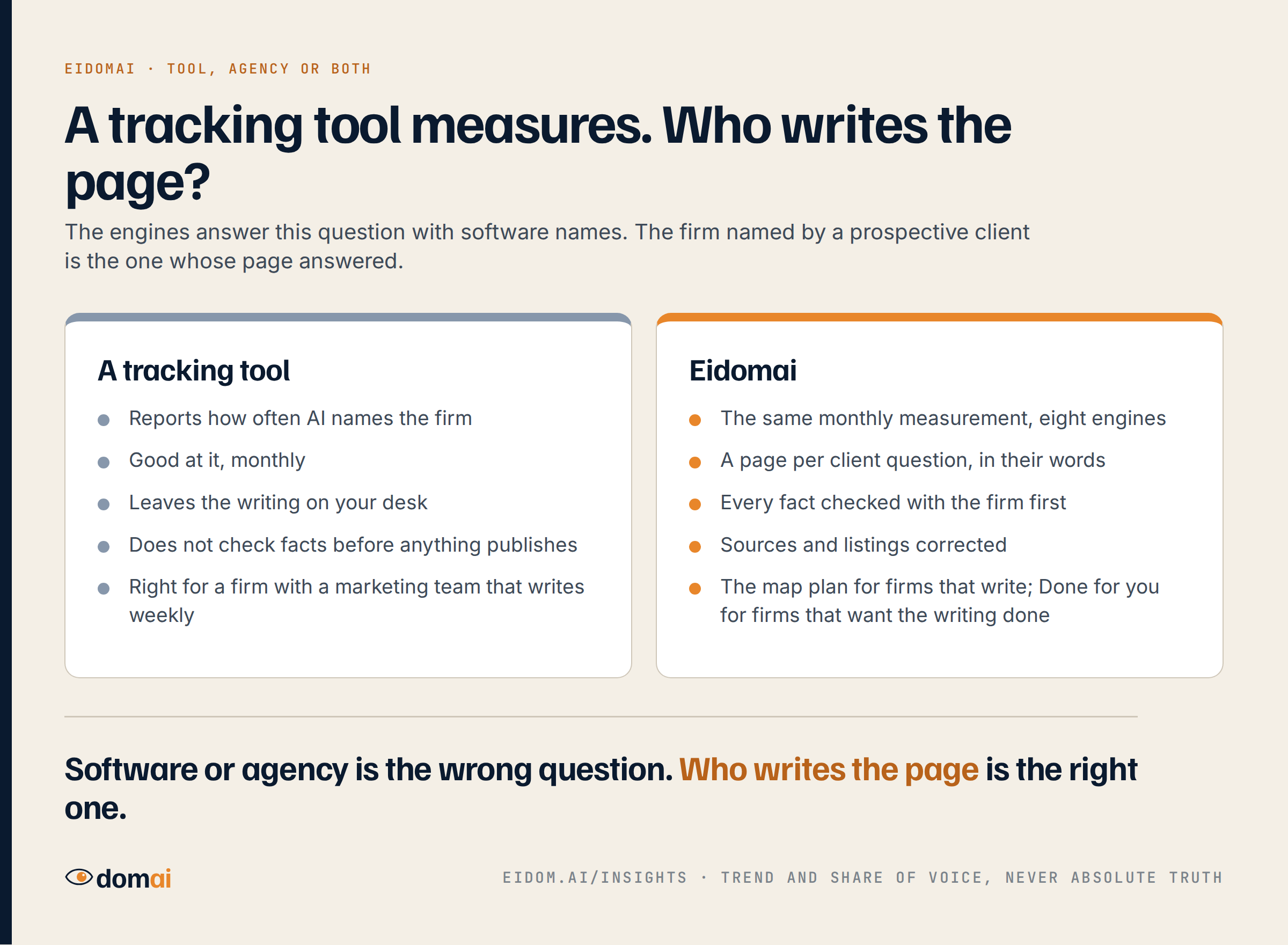
Best AI search visibility service for a law firm
The engines answer this question with software names. A firm does not need software; it needs pages that answer the client's question in the client's words, facts checked, and a monthly read on who the engines name. Here is how the two compare.
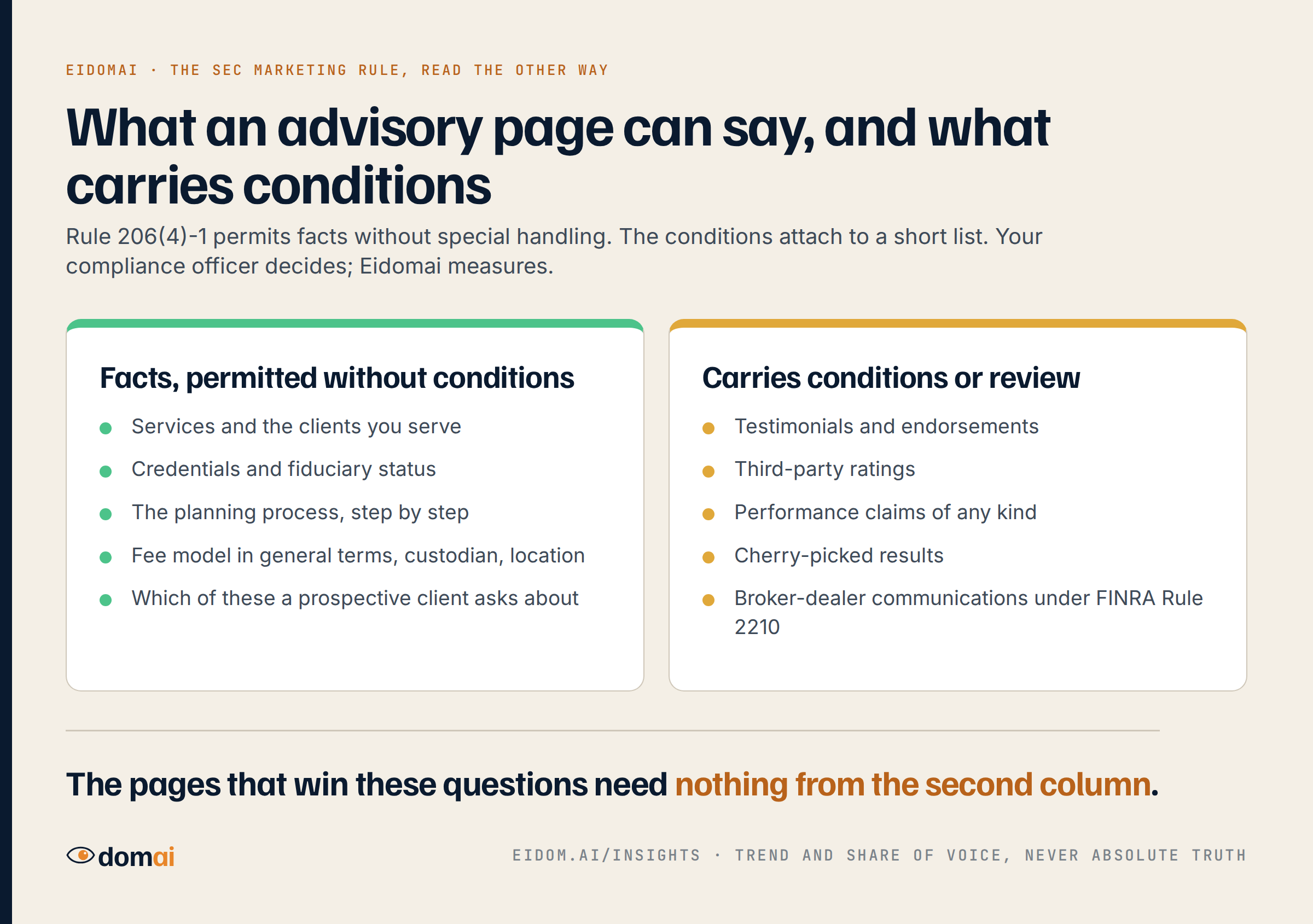
Who can help a financial advisory firm show up in ChatGPT without breaking the SEC marketing rule?
An advisory firm can be named by AI engines with pages that state services, credentials and approach as fact, with no performance claims and no unreviewed testimonials. Here is where the line sits and how the work runs inside it.
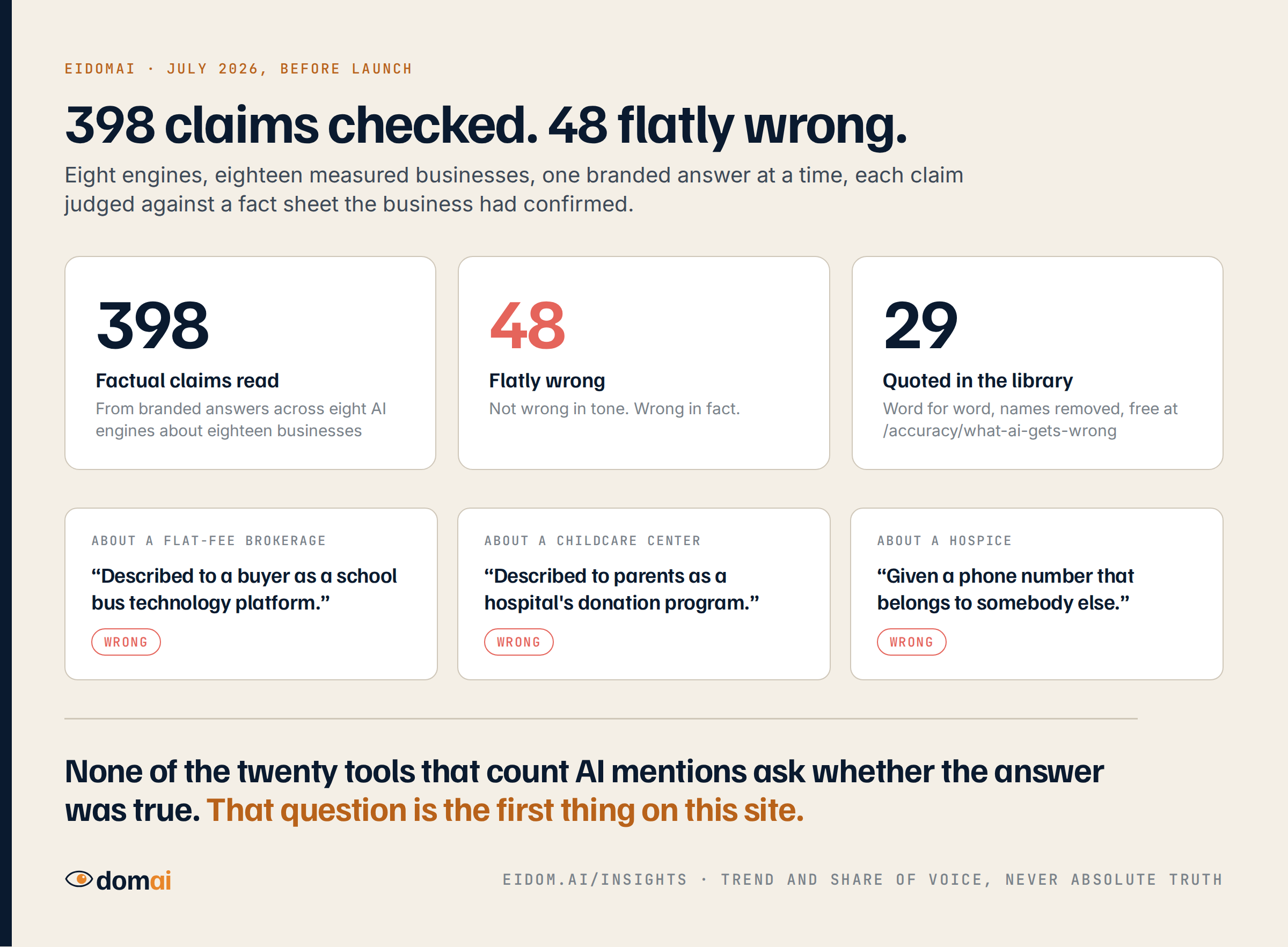
What we measured before we had a name
398 claims checked, 48 flatly wrong, and why the accuracy layer is the first thing Eidomai publishes rather than the last.
Want to see your own map?
We run your measurement before the call, so the demo opens on your own battle map: which questions you hold, which a competitor holds, and what the engines get wrong about you today.