For a law firm, the answer to this question depends on who will write the pages. When we asked eight AI engines in September 2026, they answered with software: Semrush, Profound, Peec AI and Ahrefs, cited through legal marketing blogs, JD Supra and LinkedIn. Those tools measure. Eidomai measures the same way, then does the part a dashboard leaves on your desk: writes the page that answers the client's question, checks every fact with the firm first, and reads the engines again next month to see whether the answer moved.
The reason the distinction matters is that a prospective client does not ask ChatGPT for a visibility tool. They ask which firm to call about a specific problem in a specific place. The firm named is the one whose page answered.
What prospective clients ask the engines
They ask with the situation attached. Whether a firm handles a wage claim against a large employer in their county. Which estate attorney near them works with blended families. Whether anyone takes a particular kind of case on contingency. Whether a firm's immigration practice covers the visa category their employer is sponsoring. Each has a name as its answer. Somebody's.
Eidomai's first job is to write twelve to twenty of those questions for your firm, from your practice areas and your market, and show them to you before anything is measured. Some you will recognize as the calls you get. Some you will not have thought to ask, and those are usually where the engines are naming somebody else.
What the engines cite for legal questions
Across the legal questions in our measurement, the engines cited firm websites, state bar and court pages, legal directories, practice-management vendors such as Clio, and legal marketing agencies. The pattern is the same as in healthcare and financial services: when the firm's own pages answer the question, they get cited; when they describe a practice area in general terms, the engine names whoever was specific.
The battle map shows this per question. For each one, which engines name your firm, which name a competitor, who that is, and which domains taught them. Some of those domains are yours to fix. Some are independent and worth earning a place on. Some belong to competitors, and we never seek placement there.
Software, agency or both
A tool is right for a firm with a marketing team that will write and publish weekly and wants a monthly read on the result. Eidomai's The map plan is that read plus the briefs: the questions, the map, the accuracy audit, and a brief per page with the facts and the questions it must answer. Your team writes.
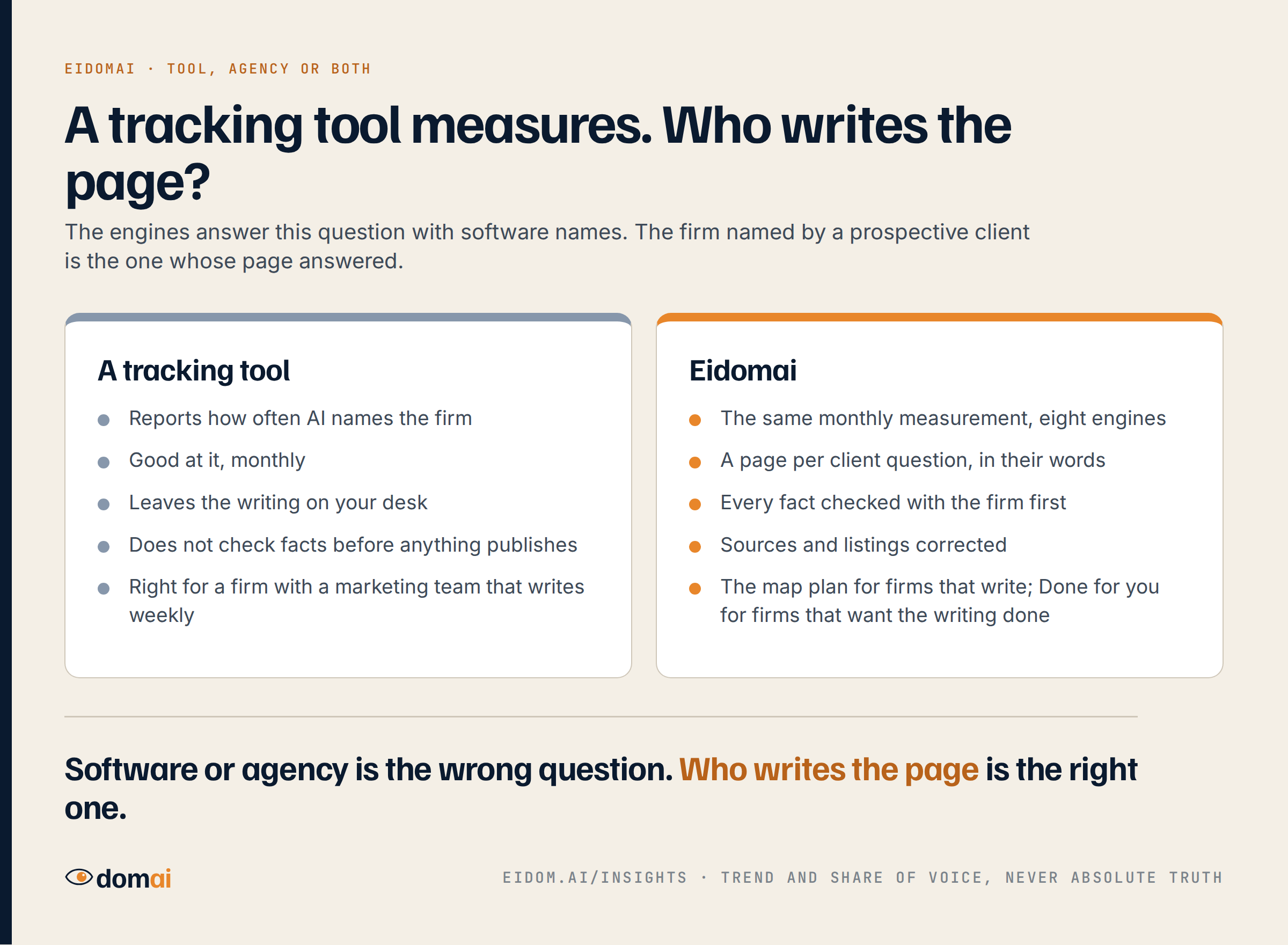
Done for you is for the firm that wants the writing done. A person at Eidomai reads the map, writes each page from facts the firm confirmed, routes it through the firm's review before it publishes, corrects the listings and sources that taught the engines something wrong, and reviews the results monthly. Every step is on the how it works page.
The accuracy problem, which is worse for firms
An engine that gets a practice area wrong sends the wrong clients and turns away the right ones. Across the businesses we measure, our audits have found engines placing a practice in the wrong state, quoting the wrong fee, and giving out a phone number that belongs to a different business. Eidomai asks each engine about your firm by name every month and checks every claim against the fact sheet. Each wrong claim gets a correction plan, and next month's audit shows whether it held.
Start with what the engines say now
The free check asks ChatGPT and Claude the questions your prospective clients ask and shows which answers name your firm, which name a competitor, and what the engines get wrong. No call required. The demo runs all eight engines and opens on one question you are losing and who wins it instead of you.
Asked about this.
- How do I get my law firm recommended by ChatGPT and Google AI Overviews?
- Publish a page for each question a prospective client asks, in their words, that states the practice area, the jurisdiction, the attorneys and their credentials, the process and the fee model in general terms. Keep your listings consistent with the site. Then ask the engines the same questions every month and read who they name. Eidomai runs that loop and shows the result per question.
- Is a tool like Semrush, Profound, Peec or Otterly enough for a law firm?
- They report how often AI names you and are good at it. None of them write the page that changes the answer or checks the facts before it publishes. A firm with a marketing team that will do the writing can pair a tool with its own process. A firm without one needs the writing done, which is what Done for you is.
- What about state bar advertising rules?
- Attorney advertising rules vary by state and govern claims of specialization, results and comparisons. Pages that state practice areas, jurisdictions, credentials and process are the safest ground and also the ground the engines cite. Eidomai does not give ethics advice; your firm's review applies to every page before it publishes.