Step by step.
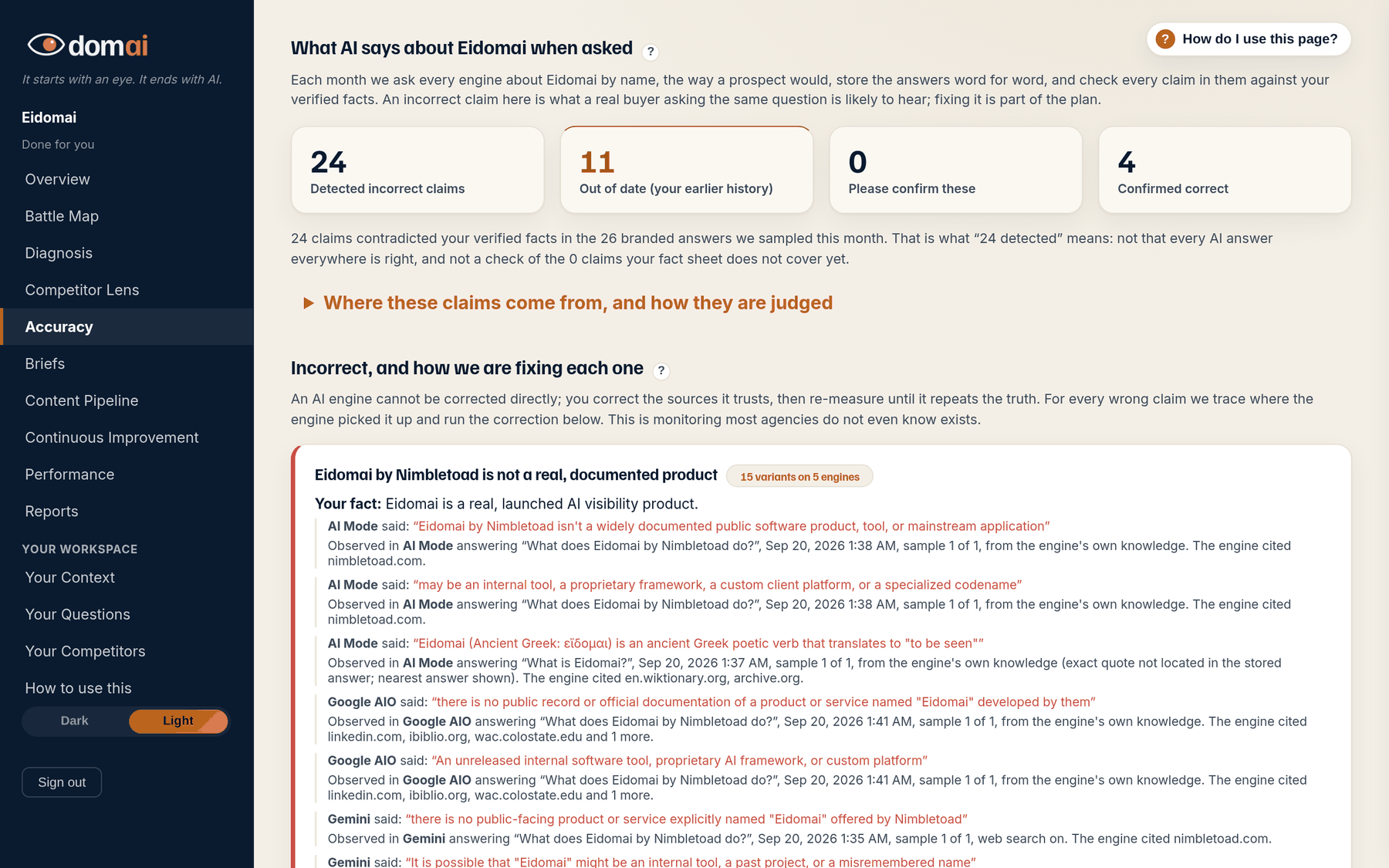
- Read the tiles: detected incorrect claims, out of date, please confirm these, confirmed correct, and corrected since last month once there are any. Zero incorrect means none were found in the answers we sampled, not that every AI answer everywhere is right.
- Read the section Incorrect, and how we are fixing each one. Every claim shows your fact, what the engine said, and exactly where it was observed: the engine, the question we asked, the date and time, which sample of how many, and the pages the engine cited.
- Under each claim, read Where it comes from. It names the source and says how sure we are: a page the engine cited, suspected but not confirmed by a citation, or not traced yet.
- Read the section Stated as fact, please confirm. These are claims your fact sheet does not cover yet. Confirm a claim, supply the correct fact is what to do with them.
- Open Where these claims come from, and how they are judged, under the tiles, once. It is the whole chain in four cards.
What happens next. Each incorrect claim has a correction plan underneath it. The correction plan, and Not right is how to work through one.
Two of the four jobs that are yours live on this tab, and both are short: confirm the facts waiting on you, and tick off the correction steps that are yours. The rest is reading, and the reading is the point. Every wrong claim on this screen was said to a real person asking a real question, and each one shows the page the engine got it from.
The tab is built on your fact sheet, the ledger on Your Context. A claim can only be judged wrong if the sheet says what is right. That is why the please confirm section matters as much as the incorrect one: every fact you confirm is one more claim that gets checked for real from next month on.
What the screen is telling you.
- Incorrect contradicts a verified fact. Correct matches one. Please confirm means your fact sheet does not cover it yet, so it cannot be judged until you do. Out of date means it was true once and is wrong today.
- Persisting means a claim carried over from last month. The fix has a realistic expected lag printed next to it: engines re-read their sources on their own schedules, and Google can be asked to recrawl a fixed page.
- The claims come from the engines' own answers to our own branded questions about you, asked at the start of every month. No third-party claim index is involved.
People ask.
- Why can you not just fix the wrong claim?
- Engines repeat what their sources say. Telling an engine the right number in your own chat fixes your chat and changes nothing for the next person. The public answer changes when the pages the engines cite say the right thing, and the next measurement shows whether they stopped.
- Why are so many claims waiting for my confirmation?
- Because your fact sheet does not cover them yet. Each This claim is correct adds the fact to the sheet, and from then on that claim is checked for real every month. A thin sheet cannot catch a wrong number.
- An engine said something wrong that is not on this tab. Why?
- The tab holds claims found in the answers we sampled this month. If you have seen a wrong answer elsewhere, use Send a note on the nearest claim, or Add a note on Your Context with the fact as it should read, and the next run checks for it.